Extended Aspect-Oriented Programming (AOP) in .NET MVC

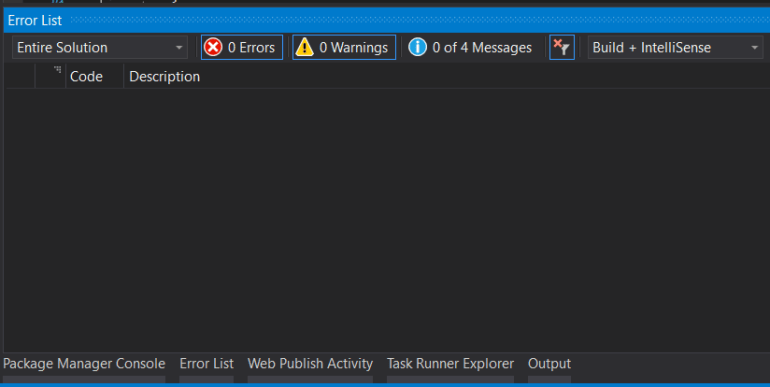
Step 9. Build the project solution or rebuild. Check the error list hasn’t any error messages or wrong messages.
Step 10. Create a new controller file and the View files for the extended aspect-oriented programming. This controller file must include fundamental CRUD methods. The controller file name sets “ExtendedActionFilterController.”


Note: If you don’t know the fundamental CRUD methods in the ASP.NET MVC web application project, please, follow the “Building MVC pattern project by Visual Studio 2017 ( ASP.Net framework Part )” article. You can reference the GitHub repository.
Step 11. Add the Action Filter method in the ExtendedActionFilter file.

This part isn’t different with the custom action filter cases because we want to advanced know the backend data transfer information from web project to DAL layer and BLL layer, which will focus on the intercept log information that will tell developers what kind of messages will be recorded by intercept message mechanisms about the web application’s backend transfer logic information.
Note: This article’s log information won’t store in the file because it will have multiple read/write task problem. This article won’t talk about it and will focus on the extended aspect-oriented programming achieving. If you want to write the inspector message to the file, I will remember using the NLog Nuget package and the Log4Net NuGet package.